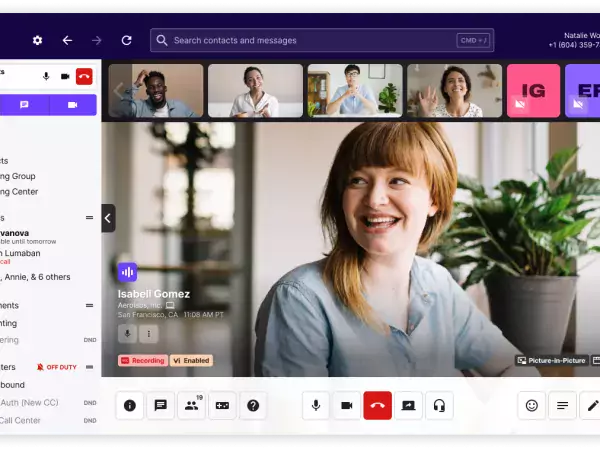
For Dialpad, a provider of cloud-native business communications platform, you will find that the majority of its projects are data science-oriented. As a team with a lot of ongoing projects and responsibilities, Dialpad is constantly coming up with many interesting ideas but they often give way to projects that have higher priority. Wanting a way to test some of these ideas without the pressure of a product deadline led Dialpad to collaborate with the MDS program and become a capstone partner.

As soon as Nicholas Sanders took a senior level NLP course during his undergraduate degree, he became hooked on data science and NLP.
“Seeing linguistics applied to computer science and statistics was especially fascinating to me,” said Sanders, who was part of the first cohort of the MDS Computational Linguistics (MDS-CL) program that graduated in 2020.
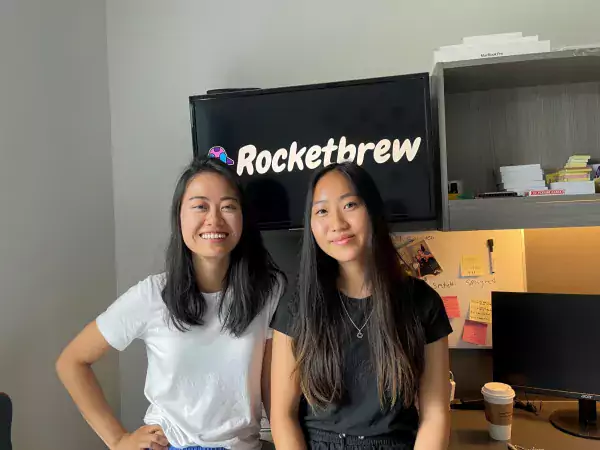
Heid Ye and Rachel Wong, MDS Vancouver Alumnae, Class of 2021, started Rocketbrew the day after MDS ended. Rocketbrew is an ecommerce dashboard for benchmarking competitors.
Matt Emery was part of the very first cohort of the MDS Vancouver program, graduating in 2017. Upon graduating, Emery soon landed a data scientist role with Imbellus eventually becoming a senior data scientist.
Since we last checked in with Emery, Imbellus was acquired by Roblox, a global platform bringing millions of people together through shared experiences, and is now a senior data scientist there.
Emery develops assessments that help Roblox identify and hire great talent.
It was during her undergraduate degree in behavioural neuroscience at UBC where Ela Bandari was introduced to the world of experimental design and data analysis. Seeing this world led Bandari to the UBC Master of Data Science program, as she saw it to be the perfect opportunity to further her understanding of these topics.
“MDS was a perfect combination of all of my academic interests. I also strongly value learning and working in a collaborative setting and MDS’ emphasis on community and collaboration aligned with my personal values and learning preferences,” said Bandari.
As part of the first cohort of the UBC Master of Data Science in Computational Linguistics (MDS-CL) program, Ilana Zimmerman looks back in awe of all that was covered during the 10-month program.
“I am currently in a Natural Language Processing role focused on machine learning and more specifically deep learning,” said Zimmerman. “I feel extremely grateful to [the MDS teaching team] for covering both traditional and deep learning approaches to a variety of NLP problems.”
Before Tanmay Sharma embarked on a data science career, he started out his professional life as a Hardware Development Engineer of SSD drives at a leading global data storage company. It was during this time that Sharma’s interest in data science was piqued.
Sharma explained that he was seeing the explosion of big data and the increased use of machine learning and artificial intelligence across all industries and its profound impact on transforming global businesses.
Prior to entering the MDS Vancouver program, Selma Durić was working as a senior accountant where much of her accounting work relied on data. “I realized that there was a lot of potential value that I could bring by being able to work with data. I also began to notice the limitations of spreadsheets and conventional accounting software and knew there had to be a better approach.”
Back in 2017, Juan Roesel worked as an innovation consultant helping corporations fast-track digital transformation processes by partnering with tech start-ups. Some of these start-ups were using Artificial Intelligence solutions, so Roesel needed to understand them to frame the right integration approach with the businesses' value chains.
“This experience was an eye-opening moment for me and triggered my decision to transition my career from a non-technical to a technical field,” explained Roesel.
It was a desire in wanting to use her programming skills to work with language data that led Darya Shyroka to pursue a data science career.
“I was always interested in languages and linguistics, but I did not see myself as a translator or language instructor. I have an analytical mind, and I knew that using my skills in mathematics and programming to analyze language could be really interesting,” said Shyroka.
When Teng Li noticed the increased popularity of large language models like ChatGPT, it got her to thinking. Originally from China, Li had a background in computer science and computer vision, and had been working as a Machine Learning Engineer for four years before considering a return to university.
Attending UBC Okanagan’s Master of Data Science (MDS) Program was an easy decision for Nijiati Abulizi, who had completed both his Bachelor’s and first Master’s degrees at UBC Okanagan.
For Sara Hall, its was during her undergraduate degree in neuroscience at the University of Calgary where she was first introduced to the power and potential of extracting knowledge from data.
Earlier this month, the latest cohorts of MDS Vancouver and Computational Linguistics gathered at Sage Restaurant on UBC's Point Grey campus while the latest cohort of MDS Okanagan met up at the UBC Okanagan campus for various orientation events.
Aside from learning data science in the Okanagan, Vimaljeet Singh was attracted to the UBC MDS Okanagan program because of its accelerated format, professional degree offering, and small cohort size.
While pursuing their Bachelor of Science in Physical Science (and a minor in business) from the University of Alberta, Ricky Heinrich found the courses they enjoyed the most involved data. When told that the work they were doing sounded like data science, a friend sent them a link to UBC’s Master of Data Science (MDS) program.
This month we welcomed the latest cohorts of the MDS Vancouver, MDS Okanagan and MDS Computational Linguistics program. Unlike last year where we welcomed them virtually, this year it was a pleasure to see all of them in-person.
Let us meet the latest crop of MDS Vancouver, Okanagan and MDS-CL students.
Before Gavin Grochowski began considering a career in data science, he was thriving as a showband musician on cruise ships embarking on international voyages. But, like so many others, Gavin’s life changed as a result of the COVID-19 pandemic.
As a quality assurance coordinator with a major manufacturing company specializing in geosynthetic and medical products, Rain Shen often poured through historical data that was not easy to decipher, nor easy to process.
As a senior water resources engineer, Nathan Smith has been working with data his entire career.
Prior to joining UBCO’s Master of Data Science program, Smith plied his trade at an engineering consulting firm, first collecting stream flow data in the BC Coastal Mountains before moving onto data analysis and modelling, along with managing data collection programs.
For Samuel Vélez, three years of working in finance opened his eyes to how data can shape the future of industries and companies.
“The data-driven organizations are the ones pushing ahead, making the most out of the huge amounts of data available today,” explained Vélez. “I wanted to be part of that and help as much as I could.”
Two other MDS teams place in top 6 out of 14 teams
Recently, the UBC Master of Data Science (MDS) program partnered with Simon Fraser University (SFU) and Employment and Social Development Canada (ESDC) to host a three-day online hackathon entitled “Integrity Hackathon: Canadian Companies Deep Dive”.
During this competition, UBC and SFU student teams of programmers and data analysts were tasked to solve a real-world challenge and present their solutions to ESDC employees. A total 14 teams made of 3-5 members competed (seven from UBC and seven from SFU).
Earlier this month, we welcomed the latest cohorts for the MDS Vancouver, Okanagan and Computational Linguistics programs.
Students joined us from across the globe and several time zones over Zoom as they got to know each other and the MDS team.
While the COVID-19 outbreak has forced the MDS program to move temporarily online, we are still happy to welcome our fifth! MDS Vancouver cohort, the third MDS Okanagan cohort and the second MDS Computational Linguistics cohort.
It was during her undergraduate studies where Kaitlyn Hobbs developed a true appreciation for data science. While completing her biochemistry degree, Hobbs often found herself favouring dry labs involving statistical analysis and introductory programming. After completing her thesis in comparing biome classification software efficacy, Hobbs thought it only natural to follow her interests and pursue formal data science learning.
An avid learner who enjoys working in interdisciplinary and diverse settings, Swapil Paliwal’s interest in the education field led him to a job within the analytics team at Apex Learning, an online education company in Seattle. His subsequent role as full-time Data Scientist exposed him to the enormous value, challenges, and applications of data analytics in multiple areas of the business.
For Connor Lee, it was a strong self-interest in data collection and analysis and an unrelenting desire to improve his technical abilities that led him to an important realization.
Students choose graduate studies for a number of reasons.
For some, their chosen profession requires it, while others want to change career paths or advance more quickly in their current roles. Many others want to conduct high-level research in an area close to their hearts or one that can change the world.
Moving In-Person to Online - How the students adjusted to learning remotely
In an ideal world, our MDS students would be learning in-person amongst their cohort but the COVID-19 outbreak has forced post-secondary institutions like UBC to move classes online.
We spoke to a few of our MDS students from the Class of 2020 on how they’ve adjusted to learning data science online.
MDS Okanagan student drops the books, dons medical gear amid COVID-19 outbreak
Ngan Nguyen Lyle was studying for an upcoming data science quiz when she got the call.
Lyle, a Master of Data Science (MDS) student at UBC Okanagan and medical doctor, was being summoned to return to work to support Interior Health’s COVID-19 response team.
Moving In-Person to Online - How faculty adjusted to teaching remotely
The COVID-19 outbreak has forced many institutions like UBC to move all classes online. The UBC Master of Data Science (MDS) program was no exception and has been teaching online since March 16.
To move to this new way of teaching, the MDS team used a variety of online tools like Collaborate Ultra and Zoom for lectures. Slack and GitHub to communicate with students and Canvas to administer exams.
We spoke to a few of our MDS teaching staff to see how they’ve adjusted to this new way of teaching and lessons learned.
Last week, we welcomed our next set of cohorts for MDS Vancouver and Okanagan as well as the very first cohort of the MDS Computational Linguistics program.
It is exciting to see the MDS program grow year-over-year. When the program began in 2016, we started with just 22 students, which then increased to 43 for year 2 and 70 students in year 3.
We are proud to see the program welcome 97 new students as the fourth cohort of MDS-Vancouver.
Here are some facts about MDS Vancouver - Cohort 4:
Rocketbrew was founded by two MDS Vancouver alumnae back in 2021 and since that time, the company and its founders have given back to the program by becoming capstone partners.
For Dialpad, a provider of cloud-native business communications platform, you will find that the majority of its projects are data science-oriented. As a team with a lot of ongoing projects and responsibilities, Dialpad is constantly coming up with many interesting ideas but they often give way to projects that have higher priority. Wanting a way to test some of these ideas without the pressure of a product deadline led Dialpad to collaborate with the MDS program and become a capstone partner.
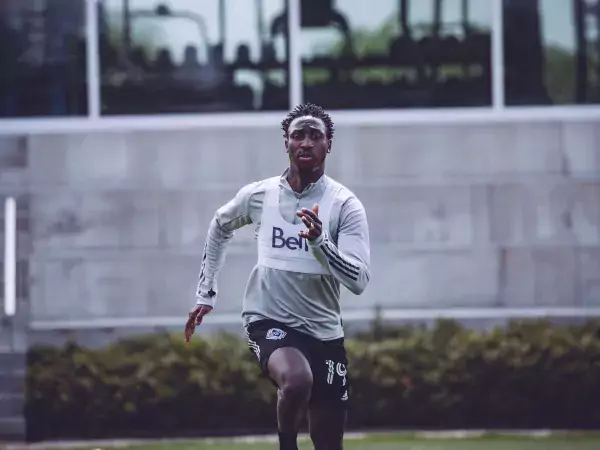
Vancouver Whitecaps FC is utilizing data science to inform decisions across several areas of Soccer Operations, including decisions about athletes’ physical preparation, injury prevention, return to sport, player identification/scouting, performance analysis, and opposition scouting.
As a retail company, GLENTEL has a large amount of transactional data from sales, employee and customer details and opinions. The organization incorporated aspects of data science in reporting and building of data marts where traditional methods wouldn’t be able to handle the scope of the data. GLENTEL recently partnered with a team from UBC MDS program to develop a model to identify keywords in resumes which correlate with employee performance.